Forex for Beginners, A Complete Course on Currencies, Brokers, and Risk
You can order the same kind of articles for your own video to boost it on YouTube and Google. Just message the Telegram bot @sat_sit_bot. Articles with your video embedded are written and posted by the bot itself — on popular topical sites (no ads). Free trial — 50 articles.
Key takeaways
- Forex is the global marketplace for exchanging national currencies, with the US dollar involved in roughly 88% of all trades.
- Traders profit from price changes in currency pairs, not from owning the currency itself.
- A broker provides leverage, typically up to 1:500 for retail accounts, which magnifies both gains and losses.
- Risking more than 1% of account equity per trade is a leading cause of beginner losses.
- A trading edge combines technical analysis, fundamental context, and strict risk management.
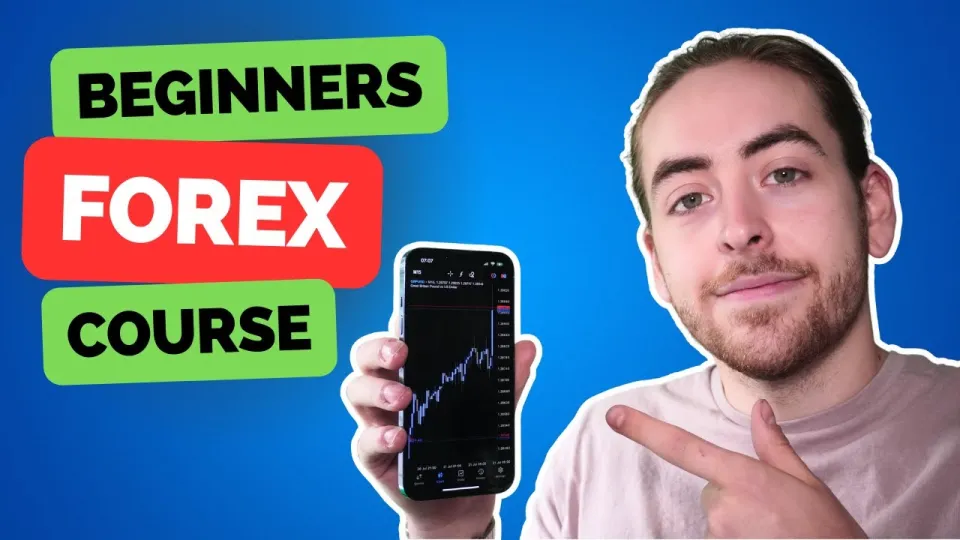
Forex trading for beginners starts with understanding what the foreign exchange market is: a global, decentralized marketplace where national currencies are bought and sold in pairs, and where the goal is to profit from changes in exchange rates. Unlike stock trading, forex has no central exchange and operates 24 hours a day, five days a week, across major financial centers. To build a solid foundation, many new traders follow a structured course like the one offered by JeaFx, and you can access additional learning materials through the JeaFx class page.
What Forex Is and What's Traded
Forex is the market for exchanging one currency for another, and all trading happens through currency pairs. The most actively traded pairs are the majors: EUR/USD, USD/JPY, GBP/USD, and USD/CHF. According to the Bank for International Settlements, the US dollar is on one side of about 88% of all forex transactions, making it the world's reserve currency and the center of most trading strategies. Currency pairs are quoted with a bid and an ask price; the difference, called the spread, is how brokers earn money on each trade. Unlike stocks, there is no central exchange for forex—trading occurs over-the-counter between banks, institutions, and retail brokers, which means prices can vary slightly between brokers but are generally arbitraged to stay close.
How Money Is Made in Forex
Profit in forex comes from correctly predicting whether one currency will strengthen or weaken against another. If you buy EUR/USD at 1.1000 and the price rises to 1.1050, you earn 50 pips (the standard unit of price movement) minus the spread and any commissions. Leverage allows you to control a large position with a small deposit—for example, a 1:100 leverage means $1,000 controls $100,000. While leverage amplifies profits, it equally amplifies losses, and most beginner traders lose money because they over-leverage and lack a defined strategy. Successful trading is not about winning every trade but about managing risk so that winners outweigh losers over time.
Broker and Trading Account Setup
Choosing a regulated broker is the first practical step for any beginner. Look for brokers overseen by top-tier regulators such as the FCA (UK), ASIC (Australia), or CySEC (Cyprus), and verify that client funds are held in segregated accounts. A standard trading account typically requires a minimum deposit ranging from $100 to $500, though some brokers offer micro accounts with as little as $10. When setting up your account, enable two-factor authentication, start with a demo account to test strategies without risking real money, and only transition to live trading once you have a consistent track record over at least 100 trades.
Building Your Market Edge
A trading edge is a repeatable advantage that gives you a higher probability of success than random guessing. For beginners, this usually means combining technical analysis (support and resistance, trend lines, candlestick patterns) with fundamental awareness (interest rate decisions, inflation data, geopolitical events). A simple yet effective strategy is trend-following: identify a clear trend on higher timeframes (daily or 4-hour charts), wait for a pullback to a key moving average, and enter in the direction of the trend with a stop-loss below the recent swing low. Backtesting this strategy on historical data—using tools like TradingView or Forex Tester—helps you understand its win rate and drawdown before risking real capital. Document every trade in a journal, noting the setup, entry, exit, and emotional state, to refine your edge over time.
Mindset and Expectations for New Traders
Trading psychology often separates profitable traders from the rest. Beginners frequently fall into the trap of revenge trading after a loss, overtrading during volatile sessions, or risking too much on a single idea. A professional approach means risking no more than 1% of your account equity per trade and setting a daily drawdown limit (e.g., 3%) after which you stop trading for the day. Expectancy—the average amount you can expect to win or lose per trade—matters more than any single outcome. Treat trading as a business: define your risk parameters, stick to your plan, and review your performance weekly. Many traders who succeed emphasize patience and discipline over quick profits.
Common Questions from Beginner Traders
New traders often ask whether they need a large account to start. The answer is no—micro accounts and proper risk management allow you to begin with a few hundred dollars, but you should only risk what you can afford to lose. Another common concern is the fear of missing out (FOMO) when a trade moves without you. A solid strategy includes predefined entry criteria; if a setup doesn't meet them, skipping the trade is the right decision. Beginners also wonder about the best time to trade: the most liquid sessions are London (8:00–16:00 GMT) and New York (13:00–21:00 GMT), when volatility and spreads are favorable. Finally, many ask how long it takes to become consistently profitable—most educators suggest a minimum of six to twelve months of dedicated practice, including demo trading and journaling, before expecting steady returns.
Useful Resources
For structured learning, the JeaFx full course provides a step-by-step curriculum covering all the basics discussed here. You can join the free Telegram community at https://t.me/therealjeafx for daily insights and Q&A, and follow JeaFx on Instagram at https://www.instagram.com/jeafx_/ for trading tips and market updates. For personalized guidance, consider the mentorship program available via https://jeafx.com/go.
Final Thoughts
Forex trading for beginners is a journey that requires education, discipline, and realistic expectations. The core components—understanding currency pairs, choosing a regulated broker, developing a repeatable edge, and managing risk—form the foundation of any successful trading career. Remember that most traders lose money initially, but those who treat trading as a skill to be honed over time can improve their odds. This overview is based on the full course by JeaFx, a channel dedicated to helping traders master the markets. To take the next step, visit the JeaFx class page and start building your knowledge today.
Questions & answers
How much money do I need to start forex trading?
You can start with as little as $100–$500 using a micro account, but the key is to risk only 1% of your account per trade. Many brokers offer demo accounts to practice without real money. Focus on consistency first, then scale up.
What is the best strategy for a beginner in forex?
Trend-following on higher timeframes (daily or 4-hour) is often recommended for beginners. It involves identifying a trend, waiting for a pullback, and entering with a stop-loss. Backtest the strategy on historical data before using real money.
How long does it take to become profitable in forex?
Most educators suggest six to twelve months of dedicated practice, including demo trading and journaling, before expecting consistent profits. Profitability depends on discipline and risk management more than on the strategy itself.
Is forex trading a scam?
Forex itself is a legitimate market, but scams exist in the form of unregulated brokers and fake mentors. Always choose a broker regulated by top-tier authorities like the FCA or ASIC, and avoid anyone promising guaranteed returns.
Source: Forex Trading For Beginners (FULL COURSE) · Markdown version